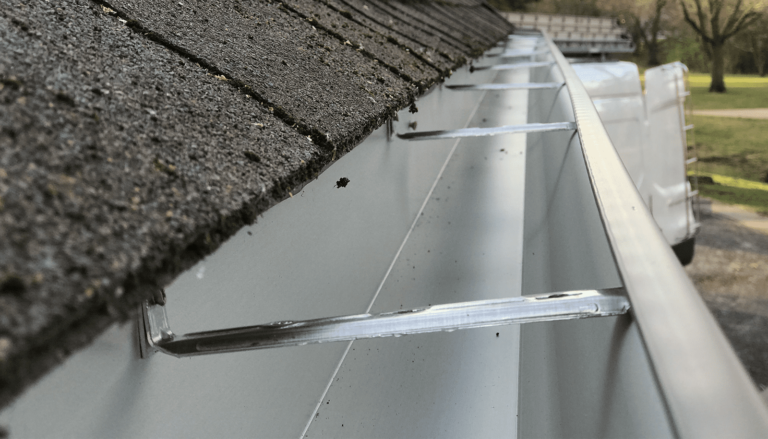

There are four main types of gutter guards. They are solid covers, foam inserts, micro mesh and screens.
Each one blocks leaves in its own way, and each has a weak spot. For most Chicago houses with trees nearby, we like screens with larger holes. The ones we fit are Raindrop.
Below, we walk through how each type works and where it falls short. Then we show how to pick one for your own roof.
Are covers, screens and leaf guards different types?
Mostly, they are different names for one family of products. Stores and installers sell them as gutter guards, gutter covers, leaf guards, gutter screens and gutter helmets.
The name says little about how a product works. The design is the part to compare. Almost every product fits one of the four types below.
How do solid covers work?
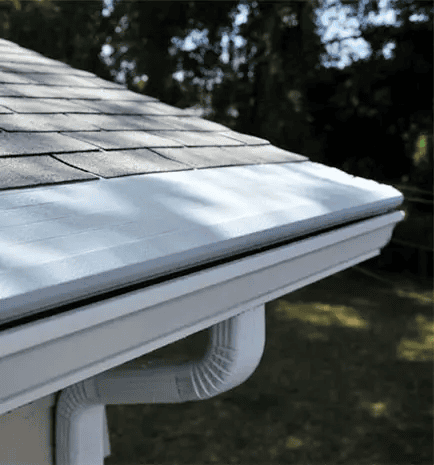
A solid cover is a curved hood over the whole gutter. Rain follows the curve around the front edge and drops into a slot. Leaves slide off the front and fall to the ground.
You may also see them sold as reverse curve or surface tension guards.
Covers block most leaves. Their weak spot is a hard rain, when water comes off the roof fast enough to jump the curve. It then pours over the edge in a sheet, right next to your foundation.
Pine needles, fine grit and small seeds can slip through the slot. To look inside the gutter, the cover has to come off. Covers are usually the most expensive type to buy and fit.
Are foam inserts a good type of gutter guard?
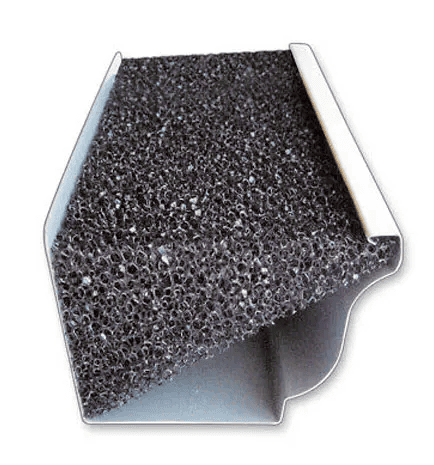
Foam inserts are long blocks of foam that fill the gutter itself. Water soaks down through the foam, and leaves rest on top. They cost the least, and many homeowners put them in on their own.
They work for a season or two. After that, sun and frost break the foam down.
Wet foam also traps seeds, and those seeds can sprout right in the gutter. Damp foam can grow mold and leave water against the roof edge. To us, foam is a short fix for a long term problem.
Does micro mesh block everything?
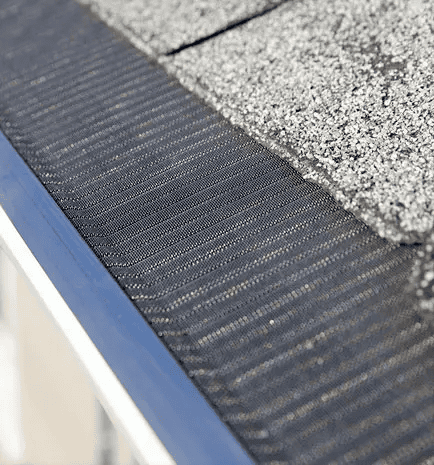
Almost everything. Micro mesh is a fine metal screen with tiny holes, so only grit and pollen get through.
Those tiny holes are also its weak spot. Dirt, pollen and shingle grit can coat the mesh and plug it. Once that happens, rain slides across the top and over the edge, the same way it does off a solid cover.
Twigs, maple seeds and pine needles pile up on the surface too, mostly in the fall. Plan to brush the mesh off now and then. Micro mesh is also one of the pricier types.
How are screen guards different from micro mesh?
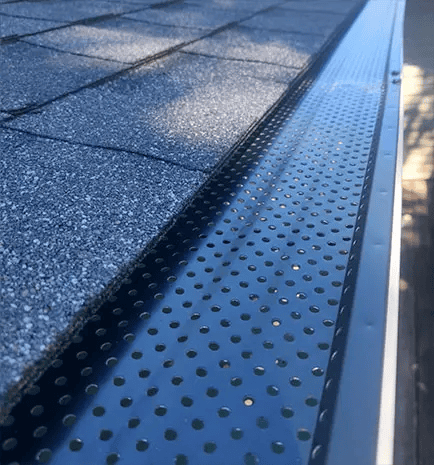
A screen guard has bigger holes. Leaves, twigs and seed pods cannot get through, and fine grit washes through the holes and out the downspout.
Grit that small flows out with the water. Leaves and twigs cause clogs, and the screen stops those.
With bigger holes, rain drops straight through in a downpour. Less water shoots over the edge than with micro mesh or a cover. Most screens are metal, some are plastic, and a large seed can wedge in a hole now and then.
Which type handles heavy rain best?
Summer storms here drop a lot of rain in a short time. Screens with larger holes do best in them, because the water has the most room to fall through.
A solid cover or a plugged micro mesh lets the fastest water jump the edge. Foam slows water down as it soaks through, so a full gutter can spill over the top.
Gutter size plays a part too. We install 6 inch gutters as our default, with 5 inch available, because a wider gutter takes more water.
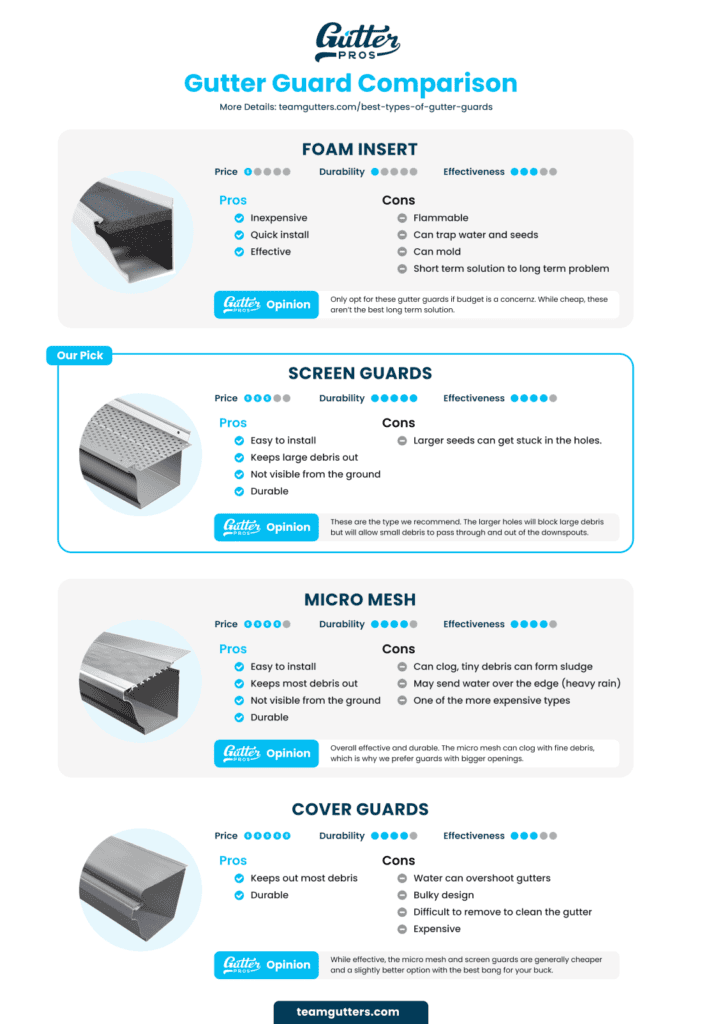
Gutter guard comparison chart
Here are all four types side by side.
Which type of gutter guard is best for your house?
The best type depends on the trees around your house and on your roof.
- Big leaves from maples and oaks: a screen with larger holes.
- Pine needles and fine seeds: micro mesh, if you can brush it off now and then.
- Few trees close to the roof: you may not need guards at all.
For that last case, read our answer to are gutter guards worth it before you spend anything.
No type ends upkeep for good. Every guard needs a look now and then, and the perfect gutter guard does not exist.
Which type do we fit, and why?
We fit Raindrop guards. They come from the screen family with larger openings, the type we rate best for most houses here.
We put them on the gutters we install, so the guard and the gutter are made to fit each other. Here are the gutter guards we fit and what they add to a job.
A guard only works as well as the gutter under it. Ours are .032 inch aluminum, hung on QuickScrew hangers every 24 inches, with gutter apron flashing on every install.
That is part of why seamless gutters are the best choice under any guard. If your gutters are due for replacement, see what new gutters cost in Chicago.
Our gutters come with a lifetime warranty on materials and workmanship. To talk through the right guard for your roof, call us at (866) 488-7776 or ask for a free estimate.